
DATE 05 - 07 JULY 2023
DATE 05 - 07 JULY 2023
DATE 05 - 07 JULY 2023
DATE 05 - 07 JULY 2023
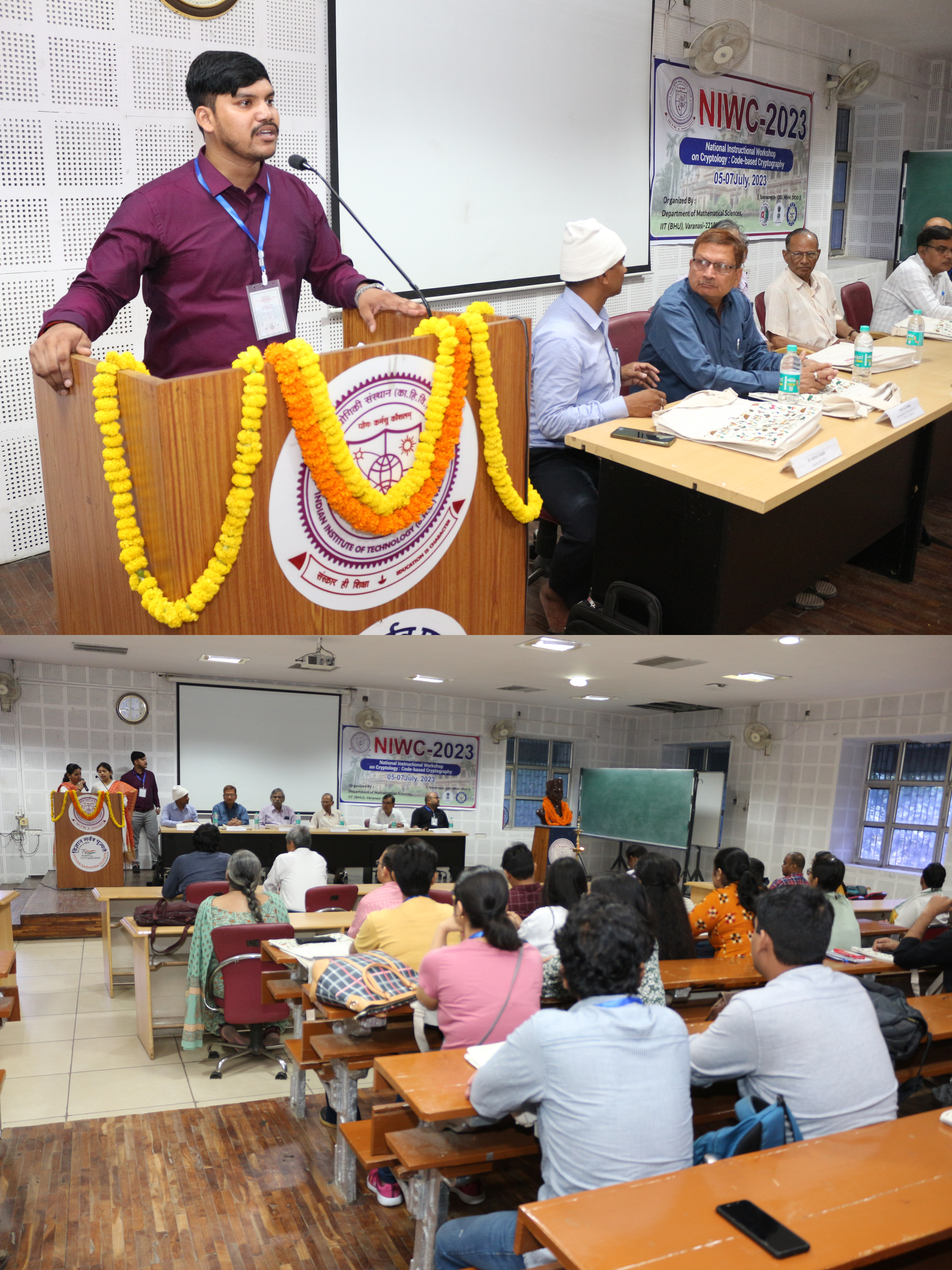
The National Instructional Workshop in Cryptology(NIWC) is the primary vehicle in India for dissemination of knowledge in Cryptology and allied areas. CRSI organizes this workshop every year, in co-operation with an Indian institution, to reach the students all across the country and provide them with a platform to explore the opportunities in Cryptology and related fields of study and research. The main theme of the NIWC-2023 is code based cryptographic primitives which are important for post quantum era.
Coding theory is a branch of mathematics and computer science that focuses on the study of error detection and correction in data transmission. It deals with designing efficient codes that can withstand and recover from errors or noise that may occur during the transmission process. Coding theory plays a crucial role in ensuring reliable and efficient communication in various fields, including telecommunications, data storage, and network protocols. By employing various encoding and decoding techniques, coding theory enables the detection and correction of errors, thereby ensuring the integrity and accuracy of transmitted data.
Cryptography, on the other hand, is the practice of securing communication and information by converting it into a form that is unintelligible to unauthorized individuals. It involves the use of mathematical algorithms and techniques to encrypt data, making it unreadable without the proper decryption key. Cryptography is widely used to protect sensitive information such as personal data, financial transactions, and confidential communications. It encompasses various encryption methods, including symmetric key encryption, asymmetric key encryption, and hash functions, which collectively provide confidentiality, integrity, and authentication to secure data.
Code-based cryptography is the branch of cryptography that relies on the hardness of some decoding problems that are recognized not to be significantly affected by quantum computers. Unlike traditional cryptographic systems that are based on the hardness of number-theoretic problems(like factorization problem or discrete log problem), code-based cryptography leverages the difficulty of general decoding problem, syndrome decoding problem, etc. It utilizes the properties of certain codes, such as Goppa codes, RS codes, RM codes etc., to construct encryption schemes that resist attacks from quantum computers. Code-based cryptography offers a promising alternative to conventional cryptographic algorithms, as it is believed to be resistant to attacks by quantum computers, which pose a significant threat to many existing cryptographic systems. It follows that code-based cryptography is one of the fields of major interest in the context of post-quantum cryptography. The importance of this field has been steadily increasing in the last few years. Fostered by the ongoing NIST’s standardization process of post-quantum cryptographic primitives, the research area of post-quantum cryptography is experiencing a dramatic speed-up in these years. Cryptographic primitives relying on the hardness of decoding a random-looking error-correcting code are notoriously resistant to quantum computer-based attacks, and indeed the branch of code-based cryptography today represents one of the most promising lines of research in the area of post-quantum cryptography.Code-based cryptography is a cryptographic approach that relies on error-correcting codes as the foundation of its security.
This workshop aims to reach students nationwide and provide them with a platform to explore an important class of Post-quantum Cryptography. The objective of this workshop is to systematically expose the students and faculties of engineering and Mathematics to the basic understanding of Code-based Cryptography.
For More Information Click Here

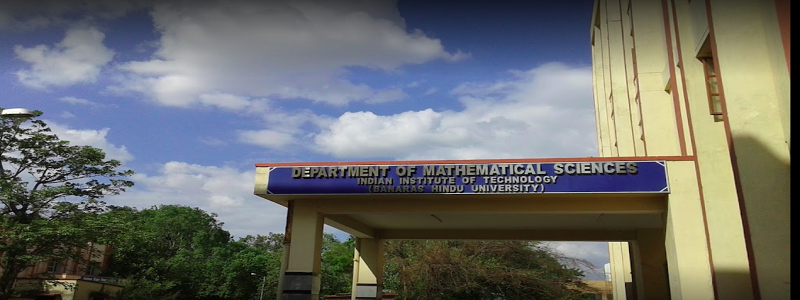
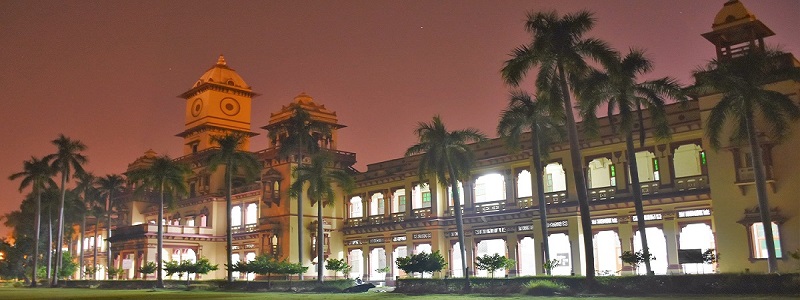
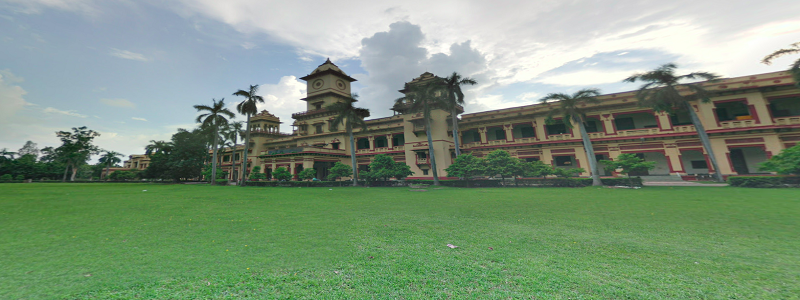
The Indian Institute of Technology (Banaras Hindu University), Varanasi owes its existence to the farsighted vision and relentless efforts of the founder Mahamana Pandit Madan Mohan Malaviya ji who created the first comprehensive residential university of India. Three engineering and technological institutions were established viz the Benaras Engineering College(BENCO) in 1919, the College of Mining and Metallurgy (MINMET) in 1923, and the College of Technology (TECHNO) in 1932 as the constituent units of Banaras Hindu University. The first ever Bachelor degree course in Electrical, Mechanical, Metallurgy, Mining, Ceramics and Pharmaceutics in India were pioneered at BHU while Pharmaceutics also being the first in Asia. After country’s independence in 1947, post graduate and doctoral research programmes were also introduced here. These colleges produced outstanding engineers who led various indigenous industries, academic institutions and R&D laboratories both within and outside the country. The three engineering colleges were merged to form the Institute of Technology (BHU) in 1968. The erstwhile IT(BHU) has been converted into IIT(BHU) Varanasi wef 29th June, 2012. Since then IIT (BHU) is witnessing realization of several significant academics, research and developmental programmes and new initiatives in all spheres of the Institute.
For More Information Please Visit

The holy city of Varanasi is known as the city of temples and learning. It is a place of great historical and cultural importance. This religious capital of India is situated on the bank of the holy river Ganges and is famous for temples of Lord Shiva, Buddha (at Sarnath) and Sankat Mochan etc. Varanasi is the premiere most place of oriental learning also. Simultaneously it is keeping pace with modern advanced knowledge. The city is reputed for silk fabrics, perfumes, artistic brass and copper wares and a variety of handicrafts. This vibrant city with multiple dimensions of knowledge and liberation has a magnetic attraction for people all over the world.
For More Information Please Visit
11 JUNE 2023
| For students/research scholars | ₹ 1180/- |
| For faculty/industry | ₹ 2360/- |
The workshop is mainly open to the faculty members and research scholars of the university/institutes/colleges. Postdoctoral/Ph. D. students working on the theme of the workshop will be preferred.
Tentative Schedule Click Here
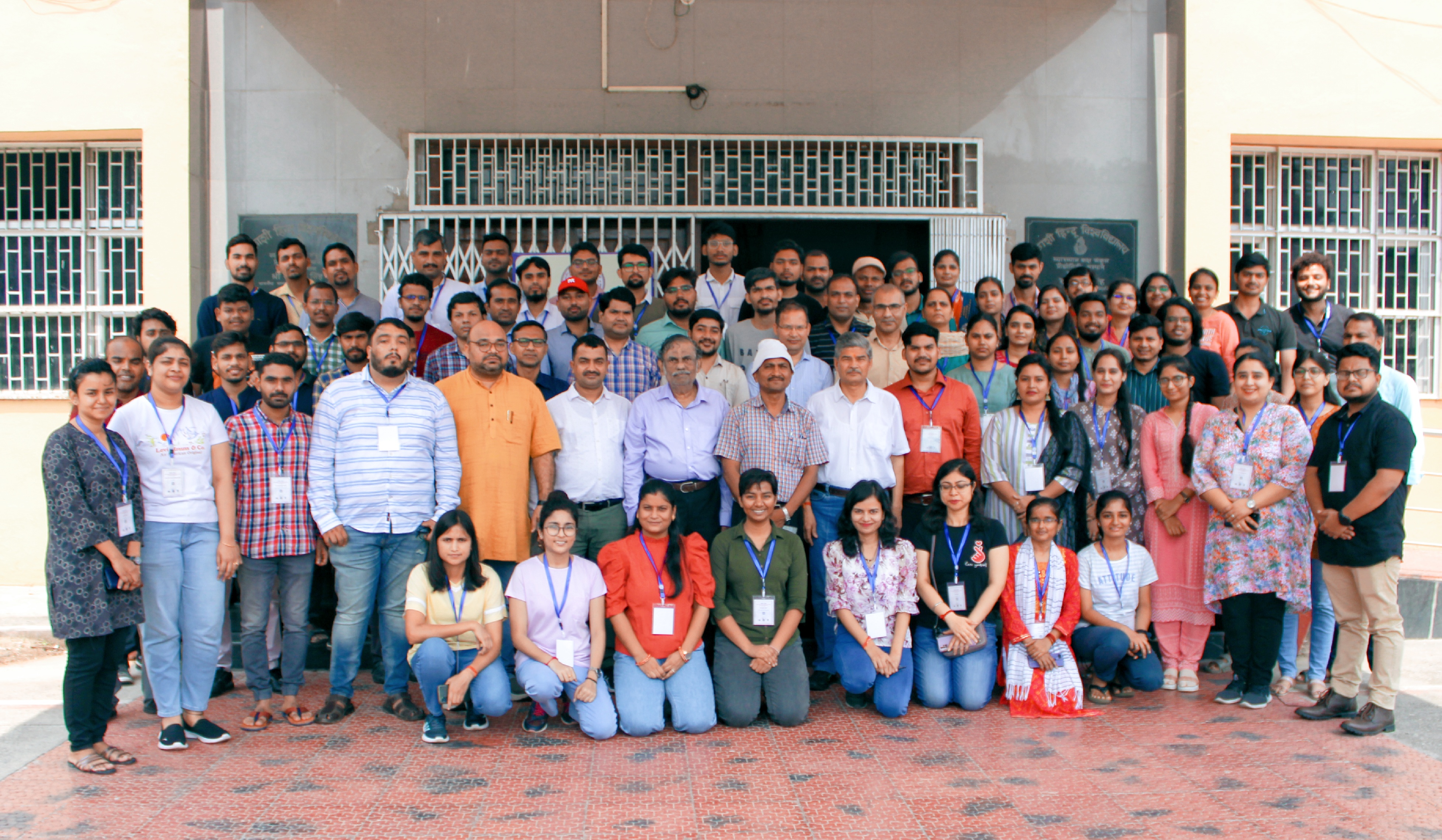
List of participants Click Here
Male Research Scholars/Students/Project Fellow: IIT Boys Hostel (S. S. Saluja Hostel), IIT(BHU), Varanasi-221005. Google Map Link
Female Research Scholars/Students/Project Fellow and Female Academicians: IIT New Girls Hostel, IIT(BHU), Varanasi-221005. Google Map Link
Contact: Mukul Kumar Verma 7599185504